BAMS



BAMS (Bachelor of Ayurvedic Medicine and Surgery) is an undergraduate degree program in Ayurveda, the traditional system of medicine in India. Ayurveda has been practiced for centuries and is gaining popularity worldwide due to its holistic approach to health and wellness. The BAMS course is designed to provide students with comprehensive knowledge of Ayurvedic medicine and its practices, along with modern medical science.
Students who pursue a BAMS degree become qualified to practice as Ayurvedic doctors and can also contribute to research, education, and healthcare management. With rising demand for alternative medicine, especially Ayurveda, BAMS graduates have a wide range of career opportunities in India and abroad.
Bodmas Education provides a detailed guide on BAMS colleges, fee structure, cutoff, and seat matrix to help you make an informed decision about pursuing this rewarding career.
Bachelor of Ayurvedic Medicine and Surgery (BAMS) is a five‑and‑a‑half‑year undergraduate degree program that integrates Ayurveda with modern medical principles.[web:124][web:143] The program consists of 4.5 years of academic study and a 1‑year compulsory internship in recognized hospitals and healthcare institutions.
The curriculum covers anatomy, physiology, pathology, pharmacology, diagnostic techniques, and core Ayurvedic subjects. Students are trained to diagnose and treat patients using Ayurvedic therapies as well as basic modern medical support, focusing on preventive and curative healthcare.
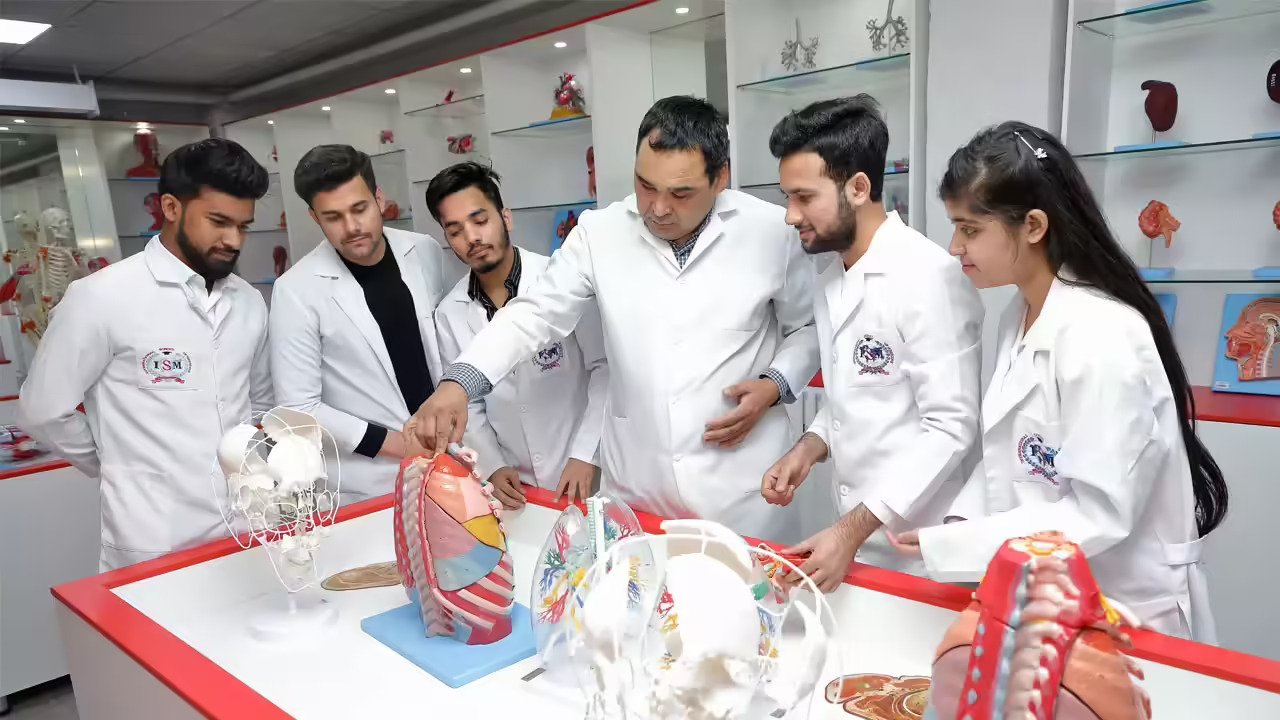
India has a large number of government and private colleges offering BAMS courses, approved by the National Commission for Indian System of Medicine (NCISM), formerly CCIM, and affiliated to reputed universities. Selecting the right college is a crucial step in your journey to becoming an Ayurvedic doctor. Bodmas Education helps you choose the best BAMS colleges that suit your academic goals, budget, and location preferences.
The BAMS course duration is five and a half years, divided as follows:

Here are some of the leading government BAMS colleges in India known for strong academics and hospital infrastructure:
| S.No. | College | State/City | Established |
|---|---|---|---|
| 1 | Institute of Medical Sciences, BHU | Varanasi | 1920 |
| 2 | National Institute of Ayurveda | Jaipur | 1976 |
| 3 | Government Ayurvedic College | Patiala | 1952 |
| 4 | Ayurvedic and Unani Tibbia College | New Delhi | 1921 |
| 5 | Government Ayurvedic College | Guwahati | 1948 |

Here are some reputed private BAMS colleges offering strong clinical exposure and infrastructure:
| S.No. | College | State/City | Established |
|---|---|---|---|
| 1 | SDM College of Ayurveda and Hospital | Udupi | 1922 |
| 2 | KLE University’s Shri BMK Ayurveda Mahavidyalaya | Belgaum | 1933 |
| 3 | D.Y. Patil College of Ayurved and Research Centre | Pune | 1999 |
| 4 | Vaidyaratnam P.S. Varier Ayurveda College | Kottakkal | 1917 |
| 5 | Sri Dharmasthala Manjunatheshwara College of Ayurveda | Hassan | 1922 |
The fees for BAMS courses vary depending on the type of institution (government or private), location, and facilities provided by the college. Government colleges charge subsidized fees, while private colleges generally have higher tuition due to infrastructure and clinical facilities.
The fee structure in government BAMS colleges is relatively low compared to private institutions. The average annual fees in government BAMS colleges range between the following values for Indian and international students.
| Student Type | Approx. Fee Range (Per Year) | Notes |
|---|---|---|
| Indian Students | ₹20,000 – ₹80,000 | Subsidized fees; suitable for students from economically weaker sections. |
| International Students | ₹1,00,000 – ₹3,00,000 | Higher than Indian category; varies by state and college policies. |
Many government colleges also offer scholarships based on merit or need, further reducing the effective fee burden for eligible students.
The fees in private BAMS colleges are higher than in government institutions. The average annual fees in private colleges range as follows for Indian and international students.
| Student Type | Approx. Fee Range (Per Year) | Notes |
|---|---|---|
| Indian Students | ₹1,50,000 – ₹5,00,000 | Varies with college reputation, location, attached hospital, and facilities. |
| International Students | ₹3,00,000 – ₹10,00,000 | Premium institutes and metros usually fall at the higher end of this range. |
Private colleges often provide modern infrastructure, advanced clinical exposure, and additional value‑added facilities, which contribute to the higher fee structure.
Apart from tuition fees, students should also plan for other recurring expenses during the BAMS course.
| Expense Head | Approx. Range (Per Year) | Details |
|---|---|---|
| Hostel Fees | ₹50,000 – ₹1,00,000 | Depends on college, room type, mess facilities, and city. |
| Books & Study Materials | ₹10,000 – ₹30,000 | Includes textbooks, reference books, notes, and stationery. |
| Clinical Training & Internship | Variable | Some colleges may charge extra for hands‑on clinical training and hospital‑based internships. |
Bodmas Education helps students explore financial aid options, scholarships, loans, and installment plans to ease the overall cost of pursuing a BAMS degree.
 BAMS Cutoff (NEET & State Exams)
The BAMS cutoff is the minimum score or rank required to secure admission. Most states use NEET‑UG for BAMS, while some also consider state‑level entrance scores. Cutoff varies by college, state, and category.
Approximate NEET‑UG cutoffs (marks) for BAMS in many states:
Several states conduct their own entrance exams for admission to BAMS courses. The cutoff for state-level entrance exams varies from state to state. Some of the states that conduct BAMS entrance exams include:
Get detailed NEET UG/PG cutoff – state‑wise and college‑wise – for government, private & deemed BAMS colleges.
Avail Our Paid CutoffSeat matrix indicates the number of seats available in each BAMS college and category (General, OBC, SC, ST, EWS, PwD, etc.). Government BAMS colleges usually offer about 50–100 seats per year, while private colleges often have 100–200 seats, depending on capacity and NCISM permissions.
Seat distribution follows reservation norms and includes state quota, All India quota (in some counselling schemes), management quota, and NRI quota in private institutes.
On average, government BAMS colleges offer 50–100 seats per year, with high competition for General category aspirants.
Typical distribution (approximate):
Private colleges usually have 100–200 BAMS seats per year, with a portion earmarked for management/NRI quota.
The reservation pattern is often similar to government colleges for state‑quota seats, but management seats have separate fee slabs and relatively flexible cutoffs.
The BAMS admission process typically involves qualifying NEET‑UG or relevant state‑level exams, followed by centralized counselling and college allotment.
Experienced counsellors guide you on best‑fit BAMS colleges based on marks, preferences, and budget.
Guidance for NEET‑UG and state exams, with realistic target setting for BAMS cutoffs.
Detailed seat matrix, fee analysis, and affordable options with scholarship/loan guidance.
From choice filling and documentation to admission and post‑admission support, everything under one roof.
Get complete support for BAMS admission – from NEET counselling and college selection to documentation, hostel guidance, and financial planning.
📞 Call/WhatsApp Now: +91-9899222022
Contact us today — our expert counsellors are ready to guide you at every step.
Fill in your details and we'll reach out shortly.
Powered by Froala Editor