×

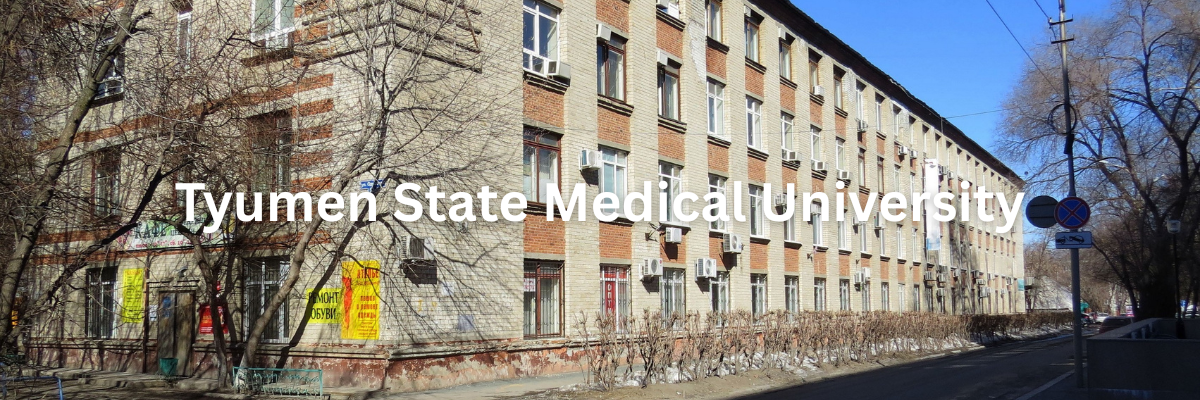
Tyumen State Medical University(TSMU) - Russia

Decorative breadcrumb background shape
Decorative breadcrumb background element
Consultation With Our Chief Mentor
Study MBBS at Tyumen State Medical University

Why an Indian MBBS aspirant would Choose Tyumen State Medical University (TSMU)

Tyumen State Medical University (TSMU) is an established, government medical university with very strong legacy. In 2023, TSMU celebrated its 60th anniversary. This exhibits its long-term stability and experience in medical education. Over the decades, the university has traversed a glorious path. TSMU traces its roots to 1963, when the Tyumen State Medical Institute was created to serve the fast-developing oil-and-gas region. Over time, it evolved from Institute (1963–1995) to Academy (1995–2015) and finally to university (since 2015)—each stage echoing expansion of programs, research and clinical collaborations.

6-year Specialist Degree Program of General Medicine is equivalent to Indian MBBS

Specialist degree program in General Medicine, a 6-year program is treated as MBBS-equivalent for licensing purposes in India, subject to NMC rules. At the end of the program graduates are awarded the qualification Physician (Vrach-lechebnik). Vrach-lechebnik translates to Medical doctor in English.

Medical Education

Clear structure of medical programs

  • TSMU offers four specialist degree programs (Специалитет): General Medicine (Лечебное дело), Pediatrics, Dentistry, and Pharmacy, plus a bachelor's program in Higher Nursing Education.
  • For Indian students accustomed to "MBBS" terminology, the closest equivalent to MBBS is the 6-year General Medicine specialist degree, which includes comprehensive clinical training.
  • The university also delivers residency (ordinatura), postgraduate (aspirantura), master's programs and mid-level medical training.
Medical Programs

Large, diverse academic ecosystem

International Students
  • The university unites 6 institutes and 2 university clinics, with over 6,700 students from different Russian regions and around 40 nations, including over 1,000 international students.
  • This scale creates an academic atmosphere where international students, including those from India, learn alongside Russian and other foreign peers.

English-supported General Medicine program

  • TSMU runs a General Medicine specialist program ("Lechebnoe delo") with English-language support, launched for international students by the Faculty of Medicine of the Tyumen State Medical University.
  • This lessens the initial language barrier while students gradually learn medical Russian for clinical work.
English Medical Education

Modern university clinics and clinical departments

Modern Medical Clinic
  • The Institute of Clinical Medicine includes 17 clinical departments (internal medicine, pulmonary medicine, cardiology, surgery, oncology, anesthesiology and intensive care, traumatology, neurology with neurosurgery, orthopedics and more).
  • The University Multidisciplinary Clinic and Stomatology clinic of TSMU give students access to real patients across more than 40 specialties, supervised by professors and senior doctors.

Transparent, regulation-based tuition and hostel fees

Tuition fees for CIS and non-CIS students are different. As India is a non-CIS country, for an Indian student non-CIS tuition fee is relevant.

First-year tuition – key medical programs (non-CIS)

  • General Medicine (Specialist, 6-year): RUB 380,600 ≈ USD 4,872 in Year 1.
  • Pediatrics (Specialist): RUB 340,560 ≈ USD 4,359.
  • Dentistry (Specialist): RUB 430,600 ≈ USD 5,512.
  • Pharmacy (Specialist): RUB 295,400 ≈ USD 3,781.
Affordable Medical Education

A typical non-CIS General Medicine student would budget roughly: ≈ USD 4,800–4,600 per year in tuition (depending on year), plus ≈ USD 450–800 per year for hostel, depending on room type.

Position in Russian higher-education landscape

TSMU is among the top 100 universities in Russia and among the top 10 universities of the Ural Federal District, reinforcing its credibility and academic standing.

Affordable & Transparent Fee Structure for Indian Students

Clear separation by citizenship (CIS vs non-CIS)

  • Tuition fees for CIS and non-CIS students are different.
  • As India is a non-CIS country, for an Indian student non-CIS tuition fee is relevant.

First-year tuition – key medical programs (non-CIS)

  • General Medicine (Specialist, 6-year): RUB 380,600 ≈ USD 4,872 in Year 1.
  • Pediatrics (Specialist): RUB 340,560 ≈ USD 4,359.
  • Dentistry (Specialist): RUB 430,600 ≈ USD 5,512.
  • Pharmacy (Specialist): RUB 295,400 ≈ USD 3,781.

First-year tuition – nursing and public-health programs (non-CIS)

  • Nursing — Full-time Bachelor: RUB 290,400 (USD 3,717).
  • Nursing — Part-time/Blended: RUB 108,000 (USD 1,382).
  • Public Health — Master's Full-time: RUB 330,000 (USD 4,224).

Later-year tuition – stability across the program

  • Tuition fee for 2nd, 3rd, 4th, 5th and 6th year for General Medicine is 356,345 RUB (≈ USD 4,561.22), 334,159 RUB (≈ USD 4,277.24), 317,975 RUB (≈ USD 4,070.08), 330,694 RUB (≈ USD 4,232.88) and 342,929 RUB (≈ USD 4,389.49) respectively.
  • Pediatrics, Dentistry and Pharmacy have similar gradations, with non-CIS tuition in the range of roughly USD 4,100–5,000+ per year depending on specialty.

Hostel & accommodation costs – low by global standards

Dormitory:

  • Budget/Target rooms at Tyumen dorm addresses such as Kotovskogo 56, Melnikayte 59, Odesskaya 48 are around RUB 817–941 per month (≈ USD 10–12).
  • Fee-paying rooms range roughly from RUB 1,610–1,833 (≈ USD 20–23.5) per month.
  • Comfort rooms and apartments (e.g., 1-bed, 2-bed, 3-bed options) range around RUB 1,515–2,875 (≈ USD 19–37) per month.

Novyy Hostel complex – modern comfort options

  • 1-bed simple: 3,700 RUB / USD 47.36 per month
  • 1-bed comfort (private bathroom): 5,000 RUB / USD 64.00 per month
  • 2-bed simple: 3,200 RUB / USD 40.96 per month
  • 2-bed comfort (private bathroom): 4,200 RUB / USD 53.76 per month
  • 3-bed simple: 2,850 RUB / USD 36.48 per month

What this means for Indian families

A typical non-CIS General Medicine student would budget roughly: ≈ USD 4,800–4,600 per year in tuition (depending on year), plus ≈ USD 450–800 per year for hostel, depending on room type.

Recognitions & Accreditations

🏛️

State federal university under the Ministry of Health

This university is designated as a federal state budgetary educational institution of higher education under the Ministry of Health of the Russian Federation.

📋

Compliance with Federal State Educational Standards (FSES)

Specialties like General Medicine are delivered in line with Federal State Educational Standards for higher medical education (FSES 3+ / 3++).

🌍

Global academic footprint via WDOMS

TSMU is listed in the World Directory of Medical Schools (WDOMS), giving it international academic visibility.

🌐

ECFMG Eligibility (USA)

Owing to WDOMS listing, students and graduates of TSMU are eligible to apply to Educational Commission for Foreign Medical Graduates (ECFMG), United States of America for ECFMG Certification and for examination.

🌍

Canada Recognition

Owing to WDOMS listing, degrees of TSMU are acceptable to the provincial/territorial medical regulatory authorities in Canada.

🌐

NMC approved

TSMU is present in the MCI (Medical council of India) list. Its 6-year Specialist Degree Program of General Medicine is acceptable for Indian licensing (FMGE/NExT).

Seamless Admission Process for Indian Students

Programs relevant for Indian aspirants

  • The key program for future Indian doctors is the 6-year specialist degree in General Medicine ("Lechebnoe delo"), with English-language support.
  • Other specialist programs include Pediatrics, Dentistry and Pharmacy, giving alternatives for students who may later on prefer child health, dental practice or pharmacology.

Document-based admission path

  • TSMU typically operates an application-based admission process: applicants submit educational certificates, passport copies, medical certificates and other required documents to the admissions office (Prikomnaya Komissiya).
  • For English-medium programs documents may be submitted via post or electronically to the university's address in Tyumen on Odesskaya Street.

Clear communication channels

Official contacts list phone numbers and email IDs specifically for:

  • Admissions committee – for general questions on entry and documents
  • University clinic and accreditation office – for clinical and licensing-related queries
  • Pre-university preparation department – for foundation or language courses

No additional "entrance test" by Indian standard exam boards

  • The university's structure and orders focus on federal educational standards, internal exam schedules and accreditation; Indian students are admitted as international applicants into these regulated programs, rather than through a separate commercial exam.

Transparent fee confirmation at the time of offer

  • Fee structure is very transparent for each and every program.
  • For example, the first-year General Medicine tuition is clearly: 349,800 RUB (USD 4,477) for CIS students; 380,600 RUB (USD 4,872) for non-CIS students.
  • Such precise numbers can be very beneficial for loan documentation.

Visa and arrival process supported by structured campus units

  • Once admitted, students can depend on the Student Office and Student Campus (Studencheskiy gorodok) for help with accommodation allocation and organisational matters after arrival.

NEET as a non-negotiable requirement by NMC

  • NMC's instructions for students who wish to study medicine abroad clearly state that qualifying NEET-UG is compulsory before joining a foreign medical course.

Minimum course length and structure requirements

  • The latest NMC-related interpretations for MBBS abroad emphasise that the primary medical qualification must be at least 54 months (4.5 years) plus a 12-month internship, totalling minimum 5.5–6 years of training.
  • TSMU's 6-year General Medicine specialist degree easily meets these criteria in terms of duration and includes substantial clinical exposure, which keeps Indian students within regulatory norms.

Education Loans & Scholarships Available for Indian Students

Comprehensive scholarship regulations at TSMU

  • TSMU publishes detailed regulations on state academic and social scholarships, including amounts, eligibility conditions and the role of the Scholarship Commission.
  • State academic scholarship for foreign citizens in 1st year (not dependent on academic performance) is 2,600 RUB / USD 33.54 per month.
  • State academic scholarship for foreign citizens in 2nd year (not dependent on academic performance) is 3,480 RUB / USD 44.89 per month.
  • State academic scholarship for foreign citizens in 3rd–6th years (not dependent on academic performance) is 4,000 RUB / USD 51.60 per month.

Increased state academic scholarship for students with special achievements

  • 1st year: 11,170 RUB / USD 144.09 per month.
  • 2nd year: 12,310 RUB / USD 158.80 per month.
  • 3rd year: 12,810 RUB / USD 165.25 per month.
  • 4th year: 13,630 RUB / USD 175.83 per month.
  • 5th year: 14,450 RUB / USD 186.41 per month.
  • 6th year: 15,270 RUB / USD 196.98 per month.

State social scholarship

  • State social scholarship for students is 4,420 RUB / USD 57.02 per month.
  • Increased state social scholarship for 1st- and 2nd-year students is 16,000 RUB / USD 206.40 per month.

Material support (financial aid) for special life situations

A separate document on material support lists one-time payments like:

  • Birth of a child during studies (36,000 RUB / USD 464.40)
  • Marriage registration during studies (36,000 RUB / USD 464.40)
  • Death of spouse, children, or parents (60,000 RUB / USD 774)
  • Compensation for medical treatment expenses not covered by insurance (Amount varies)
  • Support for orphans, students with disabilities, and those in difficult life circumstances.

Official tuition and hostel orders can be used to secure bank loans

  • Tuition and hostel orders provided on the website of TSMU constitute formal, structured evidence of cost of education, itemised by program, citizenship category and year.
  • Prepare provisional budgets in INR using up-to-date exchange rates.
  • Apply for education loans from Indian banks, which typically require official fee break-ups in foreign currency.
  • Demonstrate to banks that fees are governed by state orders, not by fluctuating private pricing.

NMC's recognition and its link to loans

  • TSMU's 6-year Specialist Degree Program of General Medicine is acceptable for Indian licensing (FMGE/NExT). General Medicine program is primary medical qualification in Russia.
  • NMC documents make it amply clear that a foreign medical qualification is acceptable if it is a primary medical qualification recognised by the local regulator.
  • NMC regulations regarding MBBS abroad says that the primary medical qualification must be at least 54 months (4.5 years) plus a 12-month internship, totalling minimum 5.5–6 years of training.
  • TSMU's 6-year General Medicine specialist degree easily meets these criteria in terms of duration and includes substantial clinical exposure, which keeps Indian students well within regulatory norms.

Education Loan Eligibility for Indian Students

Indian banks can very comfortably consider education loans for TSMU's students pursuing 6-year General Medicine specialist degree program as this degree falls well within the NMC-permitted zone.

Curriculum & Academic Structure Aligned With Indian Medical Expectations

Program type and duration

  • The core medical qualification is a 6-year specialist degree in General Medicine (31.05.01 "Lechebnoe delo").
  • This program is roughly parallel in length and depth to the Indian MBBS + internship pathway, with a great blend of foundational, pre-clinical, clinical and internship components.
  • On completion of General Medicine program graduates are awarded the qualification Physician (Vrach-lechebnik). Vrach-lechebnik translates to Medical doctor in English.

Compliance with Federal State Educational Standards (FSES)

Curriculum for General Medicine and related specialties is built around FSES requirements for clinical medicine, which specify:

  • Minimum classroom and clinical hours
  • Mandatory rotation areas (internal medicine, surgery, pediatrics, obstetrics & gynecology, etc.)
  • Competence-based learning outcomes, akin to modern "competency-based medical education" frameworks in India.

Extensive clinical department network

The Institute of Clinical Medicine's 17 clinical departments cover major disciplines like:

  • Internal Medicine (incl. cardiology, pulmonology, gastroenterology, nephrology)
  • Surgery and subspecialties, including urology, endoscopy and oncology
  • Neurology with Neurosurgery
  • Anesthesiology & Intensive Care
  • Radiology and Radiotherapy

This mirrors the breadth Indian students expect for later preparation toward exams such as FMGE/NExT.

Emphasis on forming "doctor's clinical thinking"

  • The core teaching goal is to develop clinical reasoning, diagnostic and treatment skills for the most common and socially significant diseases.
  • This focus aligns very well with Indian licensing exams that test not just recall but applied clinical decision-making.

Integration with university clinics

  • The University Multi-profile Clinic and Stomatology Clinic offer real patient exposure, where students see diverse pathologies under faculty supervision.
  • These clinics operate with extended working hours and a huge team of specialists, ensuring patient flow sufficient for bedside teaching and procedure observation.

Vertical academic pathway

After the 6-year specialist program, TSMU offers:

  • Residency (ordinatura) in dozens of clinical specialties
  • Postgraduate and master's programs in public health, psychology, biotechnology and more
  • Aspirantura (PhD-track) for research careers

For Indian students considering future specialization (MD/MS-equivalent), this vertical pathway offers options either in Russia or after returning to India.

In simple terms, while terminology differs (Specialist vs MBBS), the content, duration and clinical depth of General Medicine at TSMU match what an Indian aspirant would expect from a serious, exam-oriented medical curriculum.

Easy Connectivity Between India & Tyumen State Medical University (TSMU)

📍

University location and address

  • TSMU's main campus and administration are located in the city of Tyumen, Tyumen Oblast, at Odesskaya Street, 54.
  • University clinics and dormitories are located around Odesskaya, Melnikayte, Kotovskogo and other nearby streets, forming a compact academic and residential zone.
✈️

International access via Moscow and other hubs

  • Indian students usually fly from key Indian international airports (Delhi, Mumbai, etc.) to Moscow or another large Russian hub, then take a domestic flight or train to Tyumen.
  • Tyumen is a regional administrative centre with an airport and robust rail links, which makes the "last-mile" journey from Moscow straightforward.
📞

Clear on-ground navigation using official contacts

The university website lists:

  • Contact details for Rector's office, admissions committee, university clinics and other units
  • Exact clinic addresses (e.g., University Clinic at Odesskaya 54, Stomatology Clinic at Respubliki 44)

These references help students and parents plan routes from airport/railway station directly to campus, dorms or clinics.

FMGE/NExT readiness of TSMU Graduates

Training environment that supports strong exam preparation

  • The broad clinical department network (cardiology, pulmonology, gastroenterology, endocrinology, nephrology, neurology with neurosurgery, oncology, etc.) ensures that General Medicine students face the full spectrum of diseases that form the backbone of FMGE/NExT syllabi.
  • The focus on building clinical reasoning and practical competencies matches the problem-solving style of modern licensing exams.

High level of academic staffing and university clinics

  • The University Multi-profile Clinic employs over 100 doctors across around 40 specialties, including professors and PhD-level faculty.
  • Learning under such staff, particularly during clinical rotations, offers exposure to evidence-based diagnostic and treatment protocols, which Indian students later revise for FMGE/NExT.

Structured, competence-based curriculum

  • Federal State Educational Standards emphasise competence-based education, systematic coverage of basic sciences, pharmacology, pathophysiology, internal medicine, surgery, pediatrics and community medicine.
  • This alignment with core medical sciences and clinical disciplines is indispensable for high-stakes exams, regardless of country.

Supportive academic environment for international students including Indian students

  • TSMU has experience accommodating diverse educational backgrounds and exam goals. Over 1,000 foreign students from around 40 countries study here.
  • Indian students can easily organise peer study groups focused on FMGE-style questions while using TSMU's clinical material as primary learning content.

NBEMS FMGE 2024 statistics for TSMU

The official NBEMS FMGE 2024 Country/Institute Wise Performance report shows "TYUMEN STATE MEDICAL UNIVERSITY" with 4 candidates appeared, 1 passed and a 25.00% pass rate.

Have Questions? Ask Us!

Enquiry Banner

📞 Contact us today and take the first step toward your dream career! 🚀

We're Here for You

Powered by Froala Editor

Bodmas AI Assistant
  • Bodmas AI

    Hello 👋 I'm your Bodmas AI Assistant. Ask me anything about admissions, colleges, or exams.

; WhatsApp Chat