
 Download App


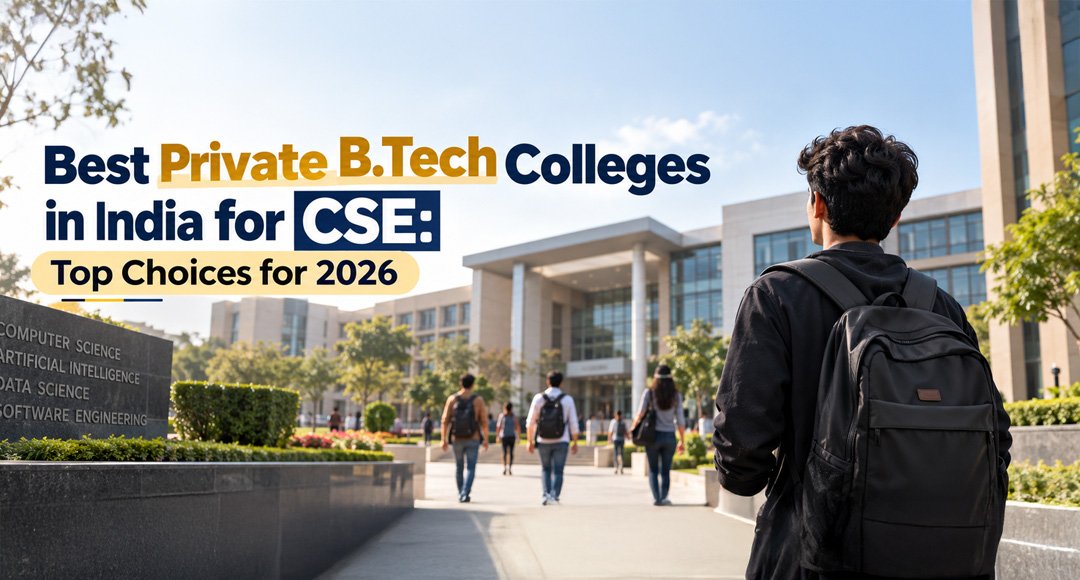
What Are the Best Private B.Tech Colleges in India for Computer Science?
Students looking for the best private B.Tech colleges in India for Computer Science Engineering (CSE) should compare academic quality, programming practice, practical projects, industry exposure, fees and career opportunities. Popular options include BITS Pilani, VIT Vellore, Manipal Institute of Technology, Thapar Institute of Engineering and Technology, SRM Institute of Science and Technology (SRMIST) and RV College of Engineering (RVCE).
Students who want to develop additional industry-oriented technology skills alongside their engineering degree can also explore NIAT (NxtWave of Innovation in Advanced Technologies). NIAT is an upskilling programme by NxtWave offered in collaboration with universities. It is not a university or a degree-awarding institution.
The right choice depends on whether students prioritise a conventional engineering education, research opportunities, coding practice or structured technology upskilling alongside a university-awarded B.Tech degree.
Which Are the Best Private B.Tech Colleges in India for Computer Science?
Students can explore the following options based on their academic goals, budget, preferred location and interest in practical technology learning.
| Particulars | Location | Why Students Should Consider It |
|---|---|---|
| Birla Institute of Technology and Science (BITS Pilani) | Pilani, Rajasthan; campuses in Goa and Hyderabad, among others | Academic rigour, flexible learning opportunities, research and entrepreneurship exposure |
| Vellore Institute of Technology (VIT Vellore) | Vellore, Tamil Nadu | CSE specialisations, coding activities, technical clubs and recruitment opportunities |
| Manipal Institute of Technology (MIT Manipal) | Manipal, Karnataka | Engineering education, technical activities, campus facilities and industry exposure |
| NIAT (NxtWave of Innovation in Advanced Technologies) | 35+ locations across India through collaborating universities | Structured technology upskilling, programming practice, AI-focused learning and applied projects alongside a university-awarded degree |
| Thapar Institute of Engineering and Technology | Patiala, Punjab | Engineering fundamentals, technical projects, research and innovation opportunities |
| SRM Institute of Science and Technology (SRMIST) | Kattankulathur, Tamil Nadu | Computer science specialisations, research opportunities and technology-focused activities |
| RV College of Engineering (RVCE) | Bengaluru, Karnataka | Engineering fundamentals, technical learning and exposure to Bengaluru's technology ecosystem |
Best Private B.Tech Options for CSE: What Makes Each Different?
1. Birla Institute of Technology and Science (BITS Pilani)
BITS Pilani is a recognised option for students seeking a rigorous engineering education, research exposure and opportunities to explore entrepreneurship. Its academic environment can appeal to students interested in developing strong engineering fundamentals and problem-solving skills.
Students should review the available CSE programme, BITS Admission Test (BITSAT) requirements, campus-specific options and the complete cost of attendance. They should also compare programming opportunities, technical projects and recent placement outcomes for their chosen programme.
2. Vellore Institute of Technology (VIT Vellore)
VIT Vellore is an option for students interested in computer science, software development and emerging technology specialisations. Students can explore technical clubs, programming activities, project work and opportunities to interact with recruiters.
Before applying, students should compare available CSE specialisations, admission categories, tuition fees and branch-wise placement data. They should also evaluate the balance between classroom learning, coding practice, internships and applied projects.
3. Manipal Institute of Technology (MIT Manipal)
Manipal Institute of Technology, part of Manipal Academy of Higher Education, offers engineering programmes with opportunities to participate in technical clubs, research activities and collaborative projects.
Students considering MIT Manipal should review the Manipal Entrance Test (MET), the current CSE curriculum, laboratory facilities, fees and internship opportunities. They should also check the practical learning opportunities available within their chosen specialisation.
4. NIAT (NxtWave of Innovation in Advanced Technologies)
For students seeking an alternative to conventional engineering education, NIAT (NxtWave of Innovation in Advanced Technologies) offers an industry-integrated learning pathway in collaboration with UGC-recognized and AICTE-approved partner universities across India.
Rather than following a purely theoretical academic structure, this pathway combines a formal B.Tech in Computer Science degree with intensive, hands-on software development training which we are calling it as new age colleges.
The program is designed to bridge the gap between college curricula and real-world tech industry standards, focusing heavily on modern software engineering, Full-Stack Development, Artificial Intelligence, and scalable system design.
Program Structure & Degree Pathway:
Accredited Degree: Students enroll through collaborating partner universities, which award the formal, accredited 4-year B.Tech in Computer Science Engineering (CSE).
Industry-Aligned Learning: NIAT delivers specialized, practical tech learning alongside academic coursework, culminating in an Industry Ready Certificate (IRC).
Practical Exposure: Students engage in production-level coding, real-world tech projects, industry bootcamps, and direct mentorship from experienced developers.
Admissions: Candidates qualify through the NxtWave Assessment Test (NAT) for program eligibility, followed by the respective partner university’s admission process.
This model is best suited for new-age students who want the security of an accredited private engineering degree in computer science engineering (CSE) combined with the practical skills required by top-tier tech companies.
5. Thapar Institute of Engineering and Technology
Thapar Institute of Engineering and Technology is an option for students seeking engineering fundamentals, technical project work and research exposure. Students interested in software and computing careers should examine the available CSE programmes and their curriculum structure.
Students should compare programme fees, internship access, faculty expertise and branch-wise placement outcomes. They should also assess the academic workload and opportunities to participate in industry-linked projects.
6. SRM Institute of Science and Technology (SRMIST)
SRMIST offers computer science programmes and related technology specialisations. Students interested in software engineering, artificial intelligence, data science and other computing fields can explore the available programme options.
Students should review the admission process, specialisation-specific fees, curriculum and campus-level placement statistics. They should also evaluate whether the programme offers sufficient opportunities to build projects, participate in technical activities and gain practical experience.
7. RV College of Engineering (RVCE)
RVCE, located in Bengaluru, is an option for students interested in established engineering education and technology-related career opportunities. Bengaluru's broader technology ecosystem can also provide a useful setting for exploring technical events, internships and professional networking.
Students should verify the current admission process, CSE eligibility criteria, tuition fees and branch-wise placement reports. They should also examine the curriculum, project opportunities and internship access before making a decision.
How Should Students Compare the Best Private B.Tech Colleges for CSE?
Students should compare more than institutional reputation when shortlisting private engineering colleges. The following factors can help them evaluate each option.
1. Curriculum and Programming Practice
A CSE curriculum should provide a foundation in programming, data structures and algorithms, database management systems, operating systems, computer networks and software engineering. Depending on the programme, students may also study artificial intelligence, machine learning, cybersecurity, cloud computing and data science.
2. Practical Projects and Industry Exposure
Project-based learning helps students apply theoretical concepts to practical problems and build portfolios for internships and entry-level technology roles. Students should look for hackathons, technical clubs, research opportunities, industry-linked projects and internships. Those considering an additional upskilling programme, such as NIAT, should also assess how its projects and technical training complement their university coursework.
3. Placement Records and Career Support
Placement statistics can help students understand the career opportunities associated with a particular programme. However, the highest salary package alone does not represent the typical outcome for CSE graduates. Students should review:
- Median and average salary packages, where published.
- The number of eligible students and the number placed.
- Branch-wise placement statistics.
- Companies recruiting for software and technology roles.
- Internship opportunities and pre-placement offers.
- Technical training, interview preparation and career support.
Students should also remember that placement outcomes depend on individual skills, academic performance, market conditions and employer requirements. No college or additional training programme should be assumed to guarantee a job or salary package.
4. Faculty, Laboratories and Learning Environment
Faculty expertise, laboratory access, computing facilities and peer learning can influence the quality of engineering education. Students should examine faculty profiles, laboratory facilities, class structure and opportunities to participate in technical communities. Campus visits and official information sessions can also help students understand the learning environment.
5. Admission Requirements and Location
Private engineering institutions may follow different admission processes, entrance examinations and academic eligibility requirements.
How Does NIAT Differ from a Conventional B.Tech College?
NIAT and a conventional B.Tech programme serve different purposes. A university provides the undergraduate degree, while NIAT provides additional technology upskilling through its university collaborations.
| Aspect | University B.Tech Programme | NIAT Upskilling Programme |
|---|---|---|
| Primary purpose | Undergraduate engineering education | Additional industry-oriented technology learning |
| Qualification | B.Tech degree awarded by the university | Separate, non-credit Industry Ready Certificate |
| Curriculum | University-defined engineering curriculum | Practical technology learning, programming, AI and applied projects covered by the programme |
| Admission | Governed by the university's eligibility and admission policies | Separate NxtWave assessment and programme process, where applicable |
| Fees | University tuition and other applicable charges | Separate upskilling programme fees |
Conclusion
The best private B.Tech colleges in India for Computer Science are those that align with a student’s academic profile, career ambitions, and preferred learning environment. Established institutions like BITS Pilani, VIT Vellore, MIT Manipal, Thapar Institute, SRMIST, and RVCE remain dependable choices for traditional undergraduate engineering education.
Concurrently, with the rapid rise of new age colleges in India, students seeking an industry-first curriculum can evaluate pathways like NIAT. By combining an accredited university B.Tech degree with specialized tech training, NIAT stands out as a strong alternative for learners seeking the best new age college experience that bridges academic theory with production-grade engineering skills.
Powered by Froala Editor