
 Download App


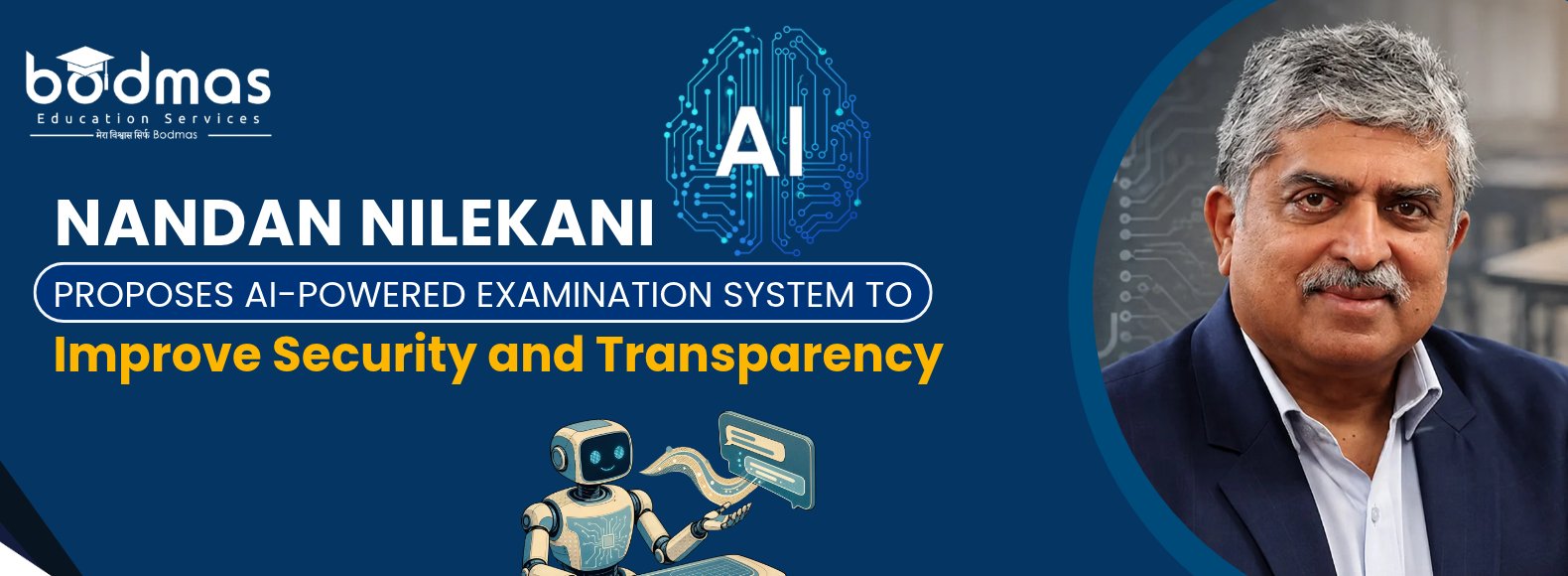
India may see major changes in its examination system as Infosys co-founder Nandan Nilekani has proposed using Artificial Intelligence (AI) to prepare question papers on the day of examinations. The proposal aims to prevent paper leaks, reduce examination fraud and make competitive examinations more secure and transparent.
Nilekani believes that technology can play an important role in improving India's examination system. His suggestions include creating a large digital question bank, generating question papers at the last moment and expanding computer-based testing (CBT) facilities across the country.
The proposal comes amid concerns over examination paper leaks and irregularities in several major competitive examinations. It could bring significant changes to the way national-level entrance and recruitment examinations are conducted in India.
What Has Nandan Nilekani Proposed?
Nandan Nilekani has suggested a technology-based approach to make examinations more secure. His key recommendations include:
1. AI-Generated Question Papers on Exam Day
Nilekani has proposed using Artificial Intelligence to generate question papers shortly before an examination begins. Instead of preparing and distributing one fixed question paper in advance, the examination authority could use AI to select questions from a large question bank on the day of the test.
This would reduce the possibility of question papers being leaked before the examination.
2. Creation of a Massive Digital Question Bank
Another important suggestion is to develop a large database of examination questions. AI could select questions from this database and prepare different question papers for different examination sessions.
This approach could make it more difficult for people to predict, steal or sell the actual examination paper.
3. Computer-Based Testing Across India
Nilekani has also recommended moving towards a nationwide computer-based testing system. Under this model, students would take examinations on computers instead of using traditional pen-and-paper methods.
He highlighted that India has around 150,000 locations that could potentially support examinations. However, the existing network would need further expansion to provide wider access to students.
Why Does India Need AI-Based Examination Reforms?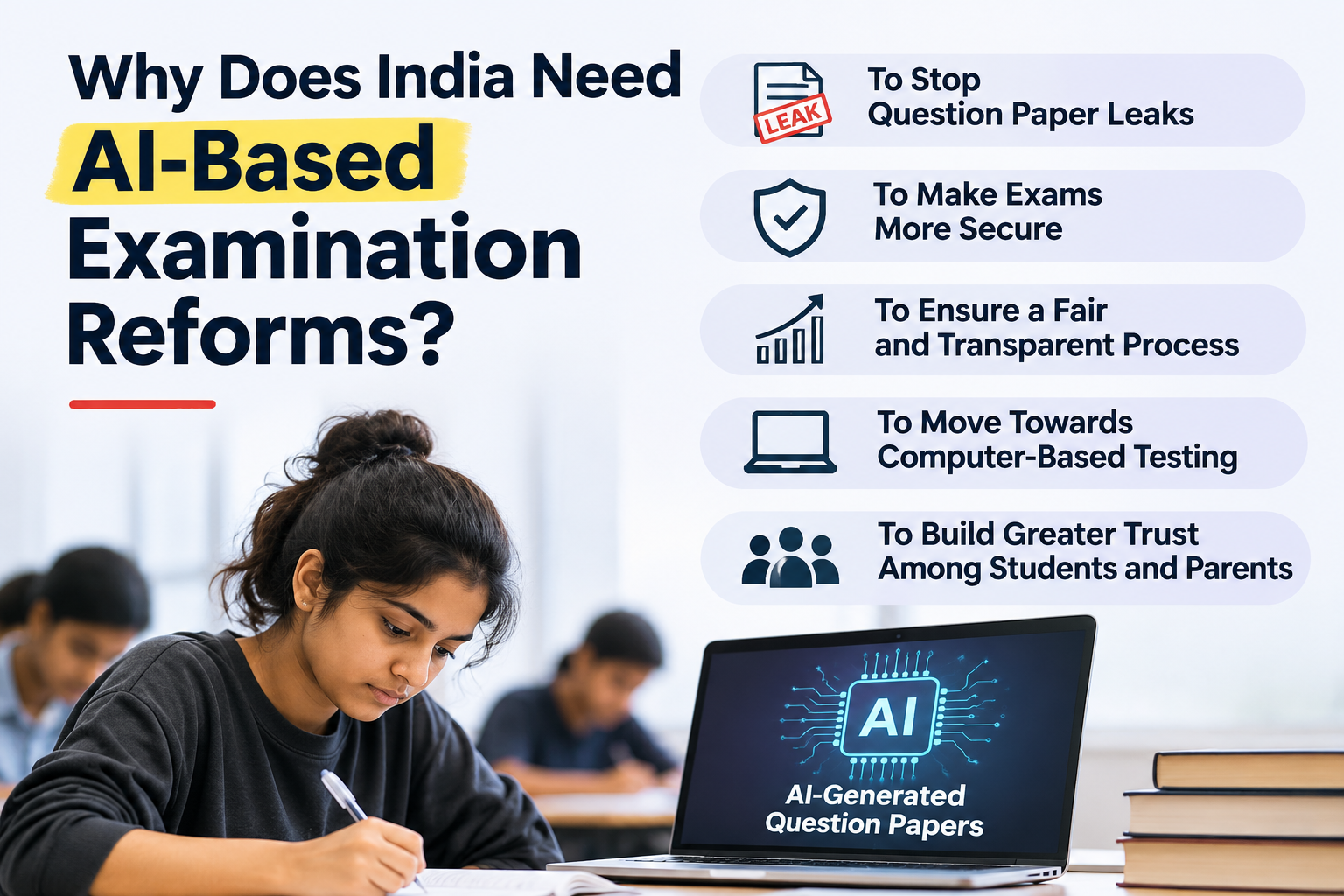
Paper leaks have become a serious concern for students appearing in competitive and entrance examinations. Such incidents affect students' careers, create uncertainty and reduce trust in the examination process.
Traditional examination systems require question papers to be prepared, printed, transported and stored before the examination. Each stage creates a possibility of security breaches.
Nilekani's proposal aims to reduce these risks by using technology. If question papers are generated shortly before an examination, the chances of advance leaks could be reduced.
The approach could be particularly important for examinations such as NEET UG, JEE Main, CUET and other national-level competitive examinations, subject to the final examination framework.
Nandan Nilekani to Lead India's Examination Reform Task Force
In July 2026, Prime Minister Narendra Modi announced a high-powered task force under the leadership of Nandan Nilekani to recommend reforms in India's public examination system.
The committee has been assigned the responsibility of exploring technology-based solutions to improve examination security, transparency and reliability.
The task force includes experts from different fields, including former ISRO Chairman S. Somnath, former Intelligence Bureau Director Tapan Deka, IIT Madras Director V. Kamakoti, former Education Secretary Anita Karwal and logistics expert Amrit Lal Meena.
The objective is to strengthen the examination system and improve the functioning of examination authorities, including the National Testing Agency (NTA).
What Could Be the Benefits for Students?
If the proposal is implemented, students may experience several changes in the examination process.
- Reduced Paper Leak Risks: Generating question papers on examination day could reduce the chances of advance paper leaks.
- Greater Transparency: Technology-based examination systems could improve the security and monitoring of examinations.
- Different Question Papers: AI could help generate multiple sets of questions from a common question bank.
- More Computer-Based Exams: Students may increasingly appear for examinations through computer-based testing.
- Improved Examination Management: Digital systems could make the examination process more efficient and organised.
What Challenges Need to Be Addressed?
Although the proposal offers several possible benefits, its implementation will require careful planning.
First, AI-generated question papers must maintain the same difficulty level across different examination shifts. Every student should get a fair opportunity, regardless of the examination centre or session.
Second, the digital question bank must contain accurate, relevant and high-quality questions. Authorities will also need strong cybersecurity systems to prevent unauthorised access.
Another important concern is the availability of computer-based examination centres in rural and remote areas. Students from different economic and geographical backgrounds should have equal access to examination facilities.
Will NEET UG, JEE Main and Other Exams Change Immediately?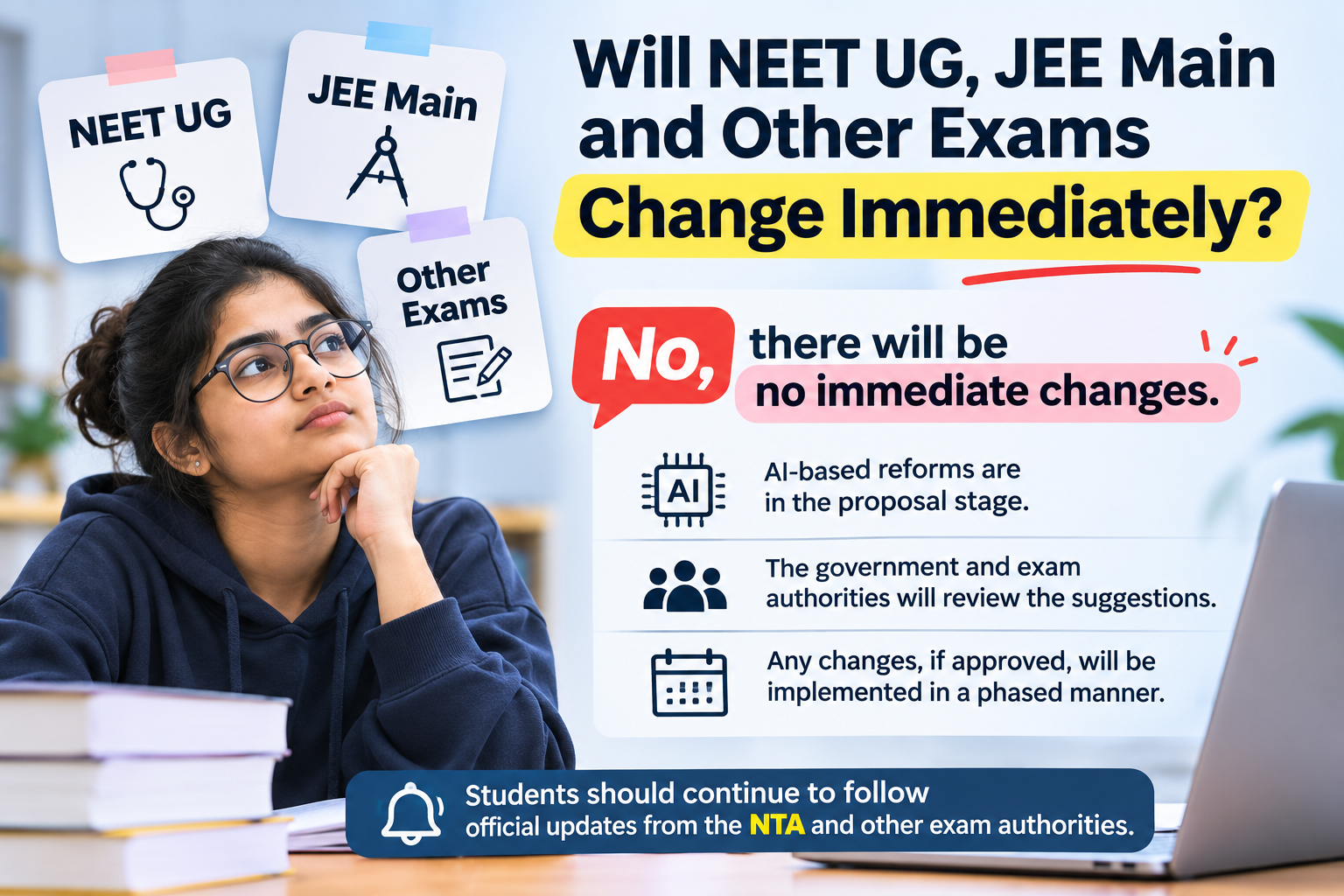
No immediate changes to NEET UG, JEE Main or other competitive examinations should be assumed based on this proposal.
Nandan Nilekani's suggestions are part of a broader examination reform process. The government and concerned examination authorities will need to examine the recommendations before introducing any changes.
Students should continue following the official notifications issued by the NTA and other examination authorities for updates regarding examination patterns, application procedures and schedules.
Conclusion
Nandan Nilekani's proposal to use Artificial Intelligence for generating question papers on examination day could be an important step towards making India's examination system more secure.The idea of combining AI-generated question papers, large digital question banks and nationwide computer-based testing aims to reduce paper leaks and improve transparency.
However, the success of these reforms will depend on their implementation, technical security, fairness and accessibility. For students and parents, the proposal is an important development to watch, but any confirmed changes will depend on official government decisions.
If you wish to obtain an education loan or would like information about it, please click on the link below.
https://bodmaseducation.com/education-loan
Powered by Froala Editor