

 Download App



India continues to face a major challenge in medical education. Every year, lakhs of students appear for the National Eligibility cum Entrance Test (NEET UG) to secure admission to MBBS courses. However, despite high competition and multiple rounds of counselling, hundreds of medical seats remain vacant across the country.
The situation has raised questions about the affordability of medical education, private medical college fee structures and the admission process. Recent reports suggest that the high cost of studying medicine is one of the major reasons why several available MBBS seats are not being taken by students.
More Than 400 MBBS Seats Remain Vacant After Special Counselling
According to recent reports, 411 MBBS seats remained unallotted even after the Medical Counselling Committee (MCC) conducted a special stray vacancy round for NEET UG 2026 admissions.
The special round included 948 vacant MBBS seats. Out of these, 537 seats were allotted to candidates, while 411 seats remained vacant.
The number is significantly higher than the approximately 60–70 vacant MBBS seats reported after the counselling process in the previous year, according to a health ministry official quoted in media reports.
The development has raised concerns about why medical seats remain unoccupied even when a large number of students are looking for admission to MBBS courses.
Why Are MBBS Seats Remaining Vacant?
There are several possible reasons behind the growing number of vacant medical seats.
1. High Fees in Private Medical Colleges
The high cost of medical education is considered one of the major reasons for vacant MBBS seats.
According to media reports, annual fees at some private medical colleges and deemed universities have increased from approximately ₹15 lakh to ₹25–30 lakh.
For many middle-class families, paying such a high amount every year is difficult. Students may qualify for NEET UG and receive an allotment, but their families may not be financially prepared to pay the required tuition fees and other expenses.
This creates a gap between getting an MBBS seat and being able to afford it.
2. Limited Affordable Options for Medical Aspirants
Government medical colleges generally have more affordable fee structures compared with many private and deemed medical universities.
However, government MBBS seats are highly competitive because thousands of students compete for a limited number of seats.
Students who do not secure government college seats may have to consider private institutions. When the fees are beyond their financial capacity, they may decide not to take admission.
As a result, some private medical college seats remain vacant despite the high demand for medical education.
3. Students May Not Accept Their Allotted Seats
Getting a seat through counselling does not always mean that a candidate will complete the admission process.
Some students may decide not to join after receiving an allotment. Financial difficulties, college preferences, location, fee structures and other personal reasons may influence their decisions.
In some cases, candidates may also choose other courses or institutions instead of accepting an available MBBS seat.
4. Difference Between College Fees and Student Expectations
Students and parents consider several factors before selecting a medical college. These include tuition fees, hostel charges, hospital facilities, clinical exposure, faculty and overall infrastructure.
If students believe that the total cost of education is too high compared with the facilities offered, they may prefer other institutions.
The concerns are particularly important for private medical colleges that charge higher fees.
Karnataka Private Medical Colleges Offer Fee Reductions
The situation has also affected private medical colleges in Karnataka.
According to reports, some private medical colleges have reduced management quota fees to attract students and fill vacant seats.
In certain cases, the overall cost of an MBBS course reportedly came down from approximately ₹1.26 crore to nearly ₹65 lakh.
Around 190 management quota seats were reported vacant even after the regular admission process.
These developments indicate that private institutions are also facing challenges in attracting students at higher fee levels.
Will the Government Conduct Another Counselling Round?
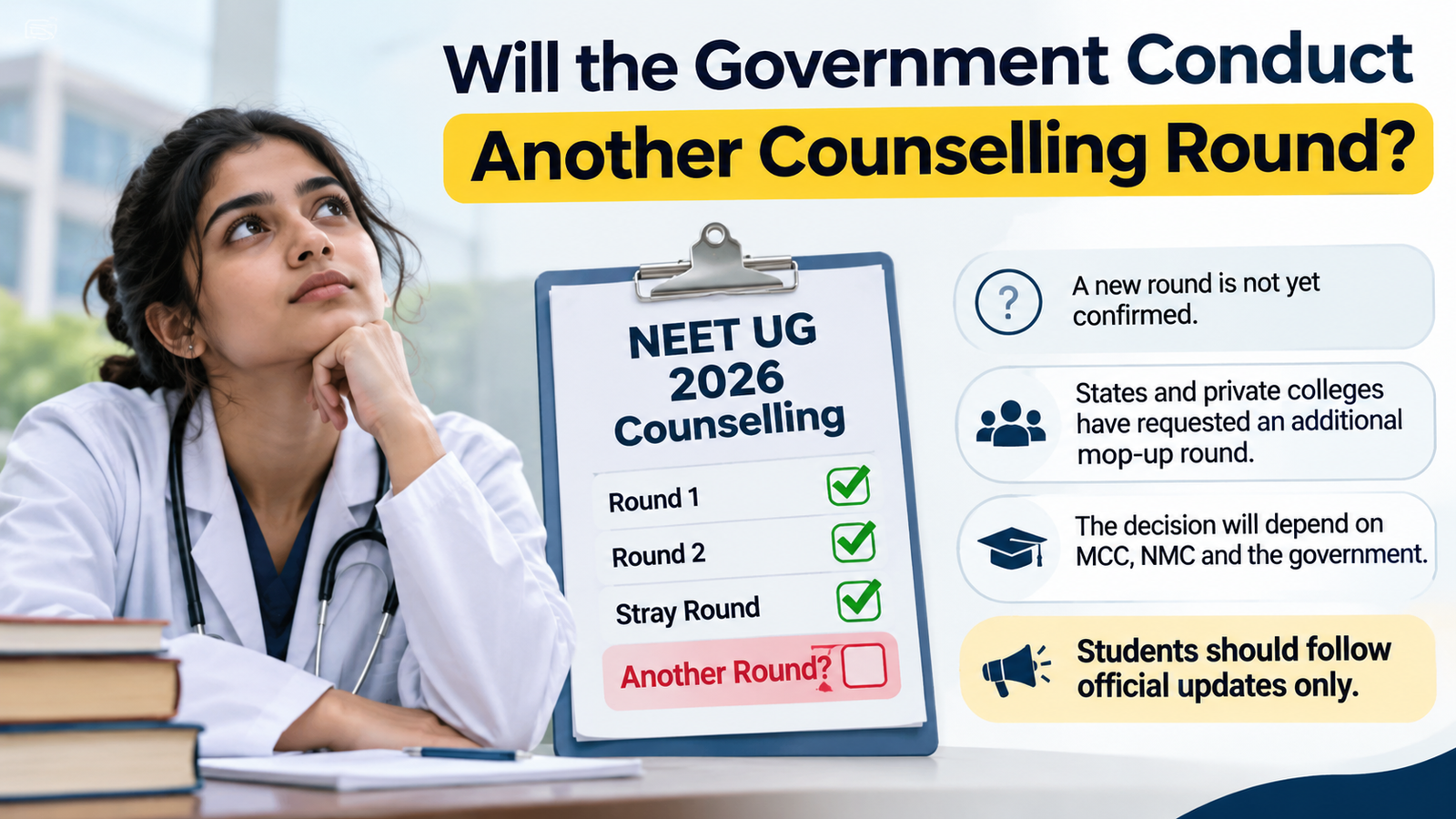
The vacant MBBS seats have raised questions about whether another counselling round should be conducted.
Earlier reports indicated that state governments and private medical colleges had approached the National Medical Commission (NMC), seeking permission for an additional mop-up round to fill vacant seats.
Some institutions and state authorities have also raised concerns about the qualifying cut-off marks.
However, any additional counselling round or change in eligibility criteria would depend on the decisions of the concerned authorities.
Students should not assume that another admission round will automatically take place. They should follow official announcements from MCC, NMC and their respective state counselling authorities.
What Does This Mean for NEET UG Aspirants and Parents?
The situation offers an important lesson for students planning to pursue MBBS courses in India.
Qualifying for NEET UG is only one part of the admission process. Students and parents must also carefully evaluate the financial requirements of medical education before selecting a college.
Before accepting an MBBS seat, candidates should consider:
- Total Course Fees: Check the complete tuition fee for the entire MBBS course.
- Additional Expenses: Calculate hostel fees, examination charges, security deposits and other expenses.
- College Recognition: Verify the college's recognition and approval status through official NMC records.
- Hospital Facilities: Understand the availability of clinical training and hospital facilities.
- Admission Rules: Follow the official counselling guidelines and payment deadlines.
These factors can help families make informed decisions and avoid unexpected financial difficulties during the course.
Conclusion
The growing number of vacant MBBS seats highlights an important challenge in India's medical education system. While the country has expanded its medical college infrastructure and increased the number of MBBS seats, affordability remains a concern for many aspiring doctors.
The latest counselling figures suggest that increasing the number of medical seats alone may not be enough. Affordable fee structures, better access to quality medical education and transparent admission policies are equally important.
The issue also highlights the need for a balance between the financial interests of medical institutions and the educational aspirations of students. Making medical education more accessible could help ensure that available seats are effectively utilised.
If you wish to obtain an education loan or would like information about it, please click on the link below.
https://bodmaseducation.com/education-loan
Powered by Froala Editor