
 Download App

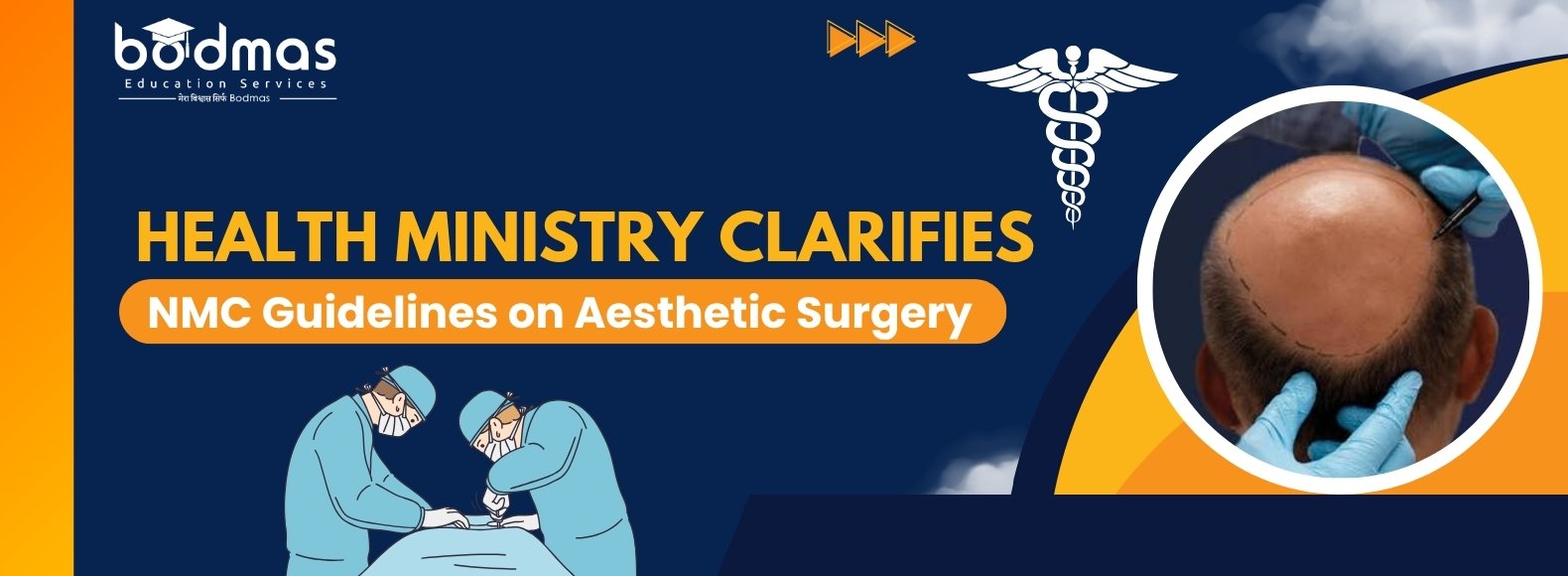
Health Ministry Clarifies NMC Guidelines on Aesthetic Surgery & Hair Transplant: Focus Remains on Patient Safety
The Ministry of Health and Family Welfare (MoHFW) has clarified that India already has a dedicated regulatory framework issued by the National Medical Commission (NMC) for aesthetic surgery and hair transplant procedures. The clarification reiterates that surgical hair restoration procedures should only be performed by appropriately trained Registered Medical Practitioners (RMPs) to ensure patient safety and ethical medical practice.
The Ministry has clarified that no separate regulatory framework is required as the existing NMC Guidelines on Aesthetic Surgery and Hair Transplant Procedures already prescribe who can perform surgical hair transplant procedures and the standards that must be followed to protect patients.
Why Has the Health Ministry Issued This Clarification?
With the rapid growth of cosmetic medicine and hair restoration procedures across India, concerns have emerged regarding the qualifications of individuals performing surgical hair transplant procedures. To address these concerns, the Ministry of Health and Family Welfare has clarified that the National Medical Commission (NMC) already has comprehensive guidelines regulating aesthetic surgery and hair transplantation.
According to the Ministry, the existing framework ensures that only appropriately qualified Registered Medical Practitioners perform surgical procedures while maintaining uniform standards of patient safety, professional accountability, informed consent, and ethical medical practice.
Key Highlights of the Health Ministry Clarification
- Existing NMC guidelines remain applicable.
- Hair transplantation is recognized as a surgical procedure.
- Qualified Registered Medical Practitioners should perform surgery.
- Patient safety remains the primary objective.
- Professional accountability has been emphasized.
- Ethical medical practice must be maintained.
- Proper training is essential for surgeons.
- No new regulatory framework has been introduced.
What Do the NMC Guidelines Say About Hair Transplant Procedures?
The National Medical Commission (NMC) defines hair transplantation as a surgical procedure whenever it involves skin incisions for harvesting donor follicles or preparing recipient sites. According to the existing guidelines, such procedures should be carried out only by appropriately trained Registered Medical Practitioners (RMPs) with adequate knowledge, surgical competency, and clinical expertise.
The objective of these guidelines is to maintain uniform standards of patient care, minimize surgical complications, and ensure that cosmetic and hair restoration procedures are performed in a safe, ethical, and professionally regulated environment.
Hair Transplant Procedures Covered Under the NMC Guidelines
- Follicular Unit Extraction (FUE)
- Follicular Unit Transplantation (FUT)
- Donor Strip Excision
- Recipient Site Creation
- Robot-Assisted Hair Transplantation
- Other Surgical Hair Restoration Techniques
Who Can Perform Hair Transplant Surgery in India?
The NMC guidelines emphasize that surgical hair transplant procedures should only be performed by qualified Registered Medical Practitioners who possess appropriate medical education, clinical training, and competency in hair restoration surgery. Doctors should also be capable of evaluating patients, managing complications, and providing comprehensive post-operative care.
| Requirement | Details |
|---|---|
| Medical Registration | Must be a Registered Medical Practitioner (RMP). |
| Professional Training | Appropriate education and practical training in hair restoration surgery. |
| Clinical Knowledge | Understanding of scalp anatomy, hair disorders, patient selection, and contraindications. |
| Surgical Skills | Competency in performing procedures and managing complications. |
| Emergency Care | Knowledge of Basic Life Support (BLS) and emergency management. |
Responsibilities Reserved for Registered Medical Practitioners (RMPs)
According to the NMC Guidelines on Aesthetic Surgery and Hair Transplant Procedures, several critical stages of hair transplant surgery should be performed or directly supervised by a qualified Registered Medical Practitioner (RMP). These responsibilities are intended to ensure patient safety, maintain professional accountability, and deliver high standards of surgical care.
Pre-Surgical Responsibilities
- Patient consultation and medical evaluation.
- Assessment of hair loss and suitability for surgery.
- Diagnosis of scalp and hair disorders.
- Pre-operative counselling and informed consent.
- Surgical planning and hairline design.
Surgical & Post-Operative Responsibilities
- Donor follicle harvesting.
- Recipient site creation.
- Hair graft implantation.
- Management of surgical complications.
- Post-operative follow-up and recovery care.
Ethical Medical Practice & Patient Safety
The Health Ministry has reiterated that the primary objective of the NMC guidelines is to safeguard patients undergoing aesthetic surgery and hair transplant procedures. Hair transplantation is a surgical intervention and may involve risks such as bleeding, infection, scarring, poor cosmetic outcomes, and medical emergencies if not performed under appropriate clinical supervision.
Patient Safety Measures Emphasized by NMC
- Qualified medical supervision.
- Proper patient selection.
- Detailed informed consent.
- Sterile surgical environment.
- Emergency preparedness.
- Management of complications.
- Ethical clinical practice.
- Appropriate post-operative care.
Key Takeaways
- Health Ministry has reaffirmed the existing NMC regulatory framework.
- Hair transplantation involving skin incisions is considered a surgical procedure.
- Only qualified Registered Medical Practitioners should perform surgical hair transplant procedures.
- Professional competency and patient safety remain central to the guidelines.
- Proper clinical training is essential before performing hair restoration surgery.
- Ethical medical practice is mandatory.
- Patient assessment and informed consent are critical.
- The clarification does not introduce new rules but reinforces the existing NMC framework.
Conclusion
The Health Ministry's clarification reinforces that India already has a well-defined regulatory framework governing aesthetic surgery and hair transplant procedures through the National Medical Commission. Rather than introducing new regulations, the clarification highlights the importance of following the existing guidelines to ensure safe, ethical, and professionally supervised surgical care.
As the demand for cosmetic and hair restoration procedures continues to grow, strict adherence to these guidelines will help improve patient safety, strengthen public confidence, and promote responsible medical practice across the country.
Fill in your details and we'll reach out shortly._1790252120.png "Bodmas Enquiry")
Neet PG Predictor
We're Here for You
Powered by Froala Editor