_1790252120.png)
 Download App

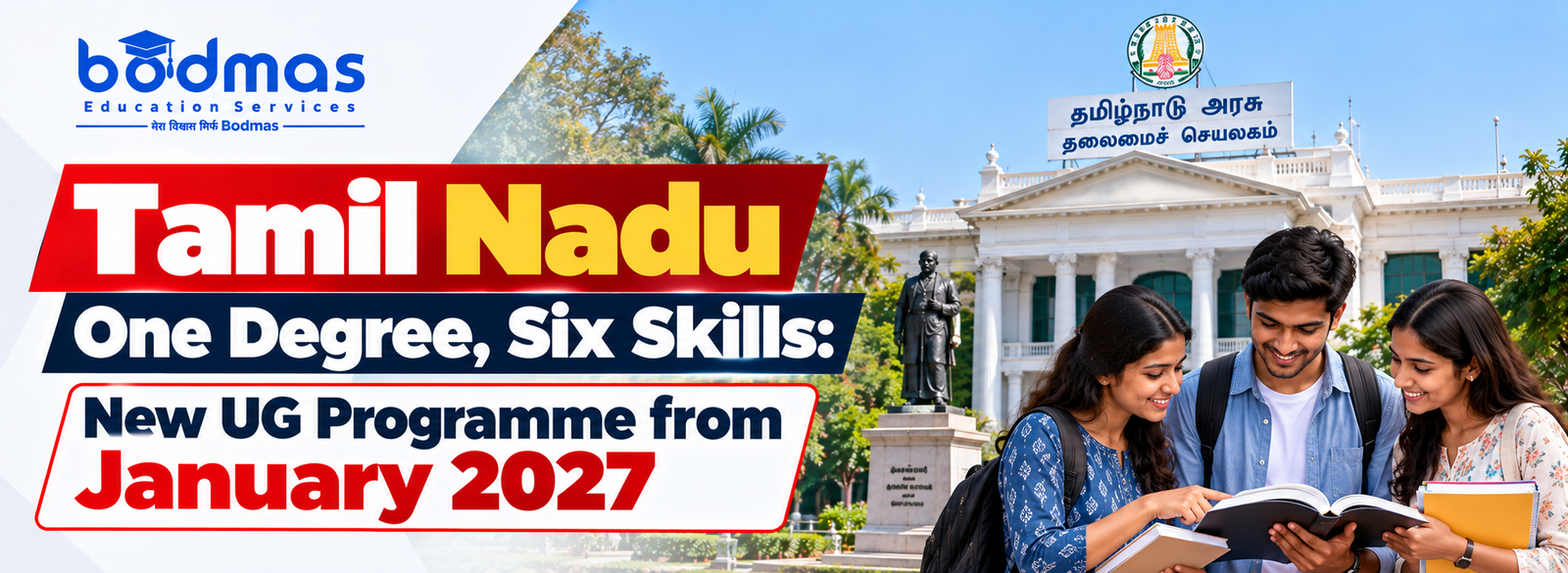
Tamil Nadu’s ‘One Degree, Six Skills’ Programme to Begin in January 2027
Tamil Nadu is set to introduce a new “One Degree, Six Skills” programme for undergraduate students in the state’s government arts and science colleges from the January 2027 semester. The initiative aims to add practical, industry-oriented skills to conventional undergraduate education and improve students’ exposure to workplace requirements.
The programme is being developed with the Tamil Nadu State Council for Higher Education (TANSCHE) and was earlier referred to as the “One Skill Per Semester” initiative under Naan Mudhalvan.
Table of Contents
What Is the One Degree, Six Skills Programme?
Under the proposed model, students pursuing a regular three-year undergraduate degree will learn one additional job-oriented skill in every semester.
Since a three-year degree normally has six semesters, students could complete their degree with exposure to six additional practical skills alongside their main academic qualification. The skill courses will not replace the student's existing degree programme.
How Will the Six Skills Be Taught?
The programme follows a one-skill-per-semester approach.
Each skill course is expected to involve around 30 to 45 hours of learning. The state has initially identified a basket of 20 skill courses covering arts and basic science areas, from which individual colleges will decide which courses they will offer. Colleges are also expected to identify suitable expert trainers for these courses.
This means students will continue studying their regular BA, BSc or other undergraduate programme while taking the additional skill course alongside it.
No Conventional Written Examination
One of the notable features of the proposed programme is its assessment model.
The reported framework does not use a conventional written examination for these skill courses. Instead, students will be assessed through practical and competency-based activities:
| Assessment Component | Weightage |
|---|---|
| Skill Exercises | 40% |
| Individual Competency | 30% |
| Final Demonstrable Output | 30% |
| Total | 100% |
The assessment is therefore designed around demonstrating the ability to apply a skill and produce an identifiable outcome, rather than simply reproducing theoretical information in an examination.
Industry Collaboration to Be Part of the Programme
The initiative also seeks to strengthen the connection between government colleges and industry.
Government colleges have been asked to establish Memoranda of Understanding (MoUs) with at least three leading industries. Departments are expected to work with companies in their respective sectors, with industry participation intended to support curriculum updates and create opportunities for internships and placements.
This industry component is intended to make the additional skills more closely aligned with employment requirements.
When Will the Programme Start?
The One Degree, Six Skills programme is expected to begin from the even semester in January 2027.
Preparations are already underway, with colleges expected to finalise the skills they will offer and nominate trainers. Faculty members have also been receiving training related to outcome-based education as part of the preparation process.
What Students Need to Know
For students considering undergraduate admission in Tamil Nadu government arts and science colleges, the key features are:
| Feature | Details |
|---|---|
| Programme | One Degree, Six Skills |
| Target Group | Undergraduate students |
| Institutions | 181 government arts and science colleges |
| Implementation | Expected from January 2027 |
| Skill Model | One job-oriented skill per semester |
| Duration | Around 30–45 hours per skill |
| Total Potential Skills | Six during a three-year degree |
| Initial Skill Basket | 20 courses |
| Assessment | Practical and competency-based |
| Industry Link | MoUs, curriculum inputs, internships and placements |
What Could Change for Undergraduate Education?
The proposed model shifts some attention from a degree-only approach towards a combination of academic qualification and practical competency.
For students, the programme could provide structured exposure to additional skills without requiring them to pursue a separate full-time course. At the same time, the effectiveness of the model will depend on the quality of the courses offered by individual colleges, trainers, practical assessment and the extent to which industry partnerships translate into meaningful internships and placement opportunities.
The programme is therefore intended to make undergraduate education more closely connected with employment-oriented learning while keeping the student's main degree as the primary qualification.
Conclusion
Tamil Nadu’s One Degree, Six Skills programme is expected to begin in January 2027 across 181 government arts and science colleges. Under the proposed model, undergraduate students will learn one practical, job-oriented skill in each semester and could graduate with a regular three-year degree alongside six additional skill areas.
With practical assessment, industry collaboration and internship opportunities forming part of the model, the programme represents an attempt to integrate employability-focused learning directly into undergraduate education. The detailed implementation, however, will depend on the skills selected and the arrangements made by individual colleges.
Stay Updated With Education & Admission News
Get the latest updates on college admissions, counselling, education policies and career opportunities from Bodmas Education.
Powered by Froala Editor