
 Download App


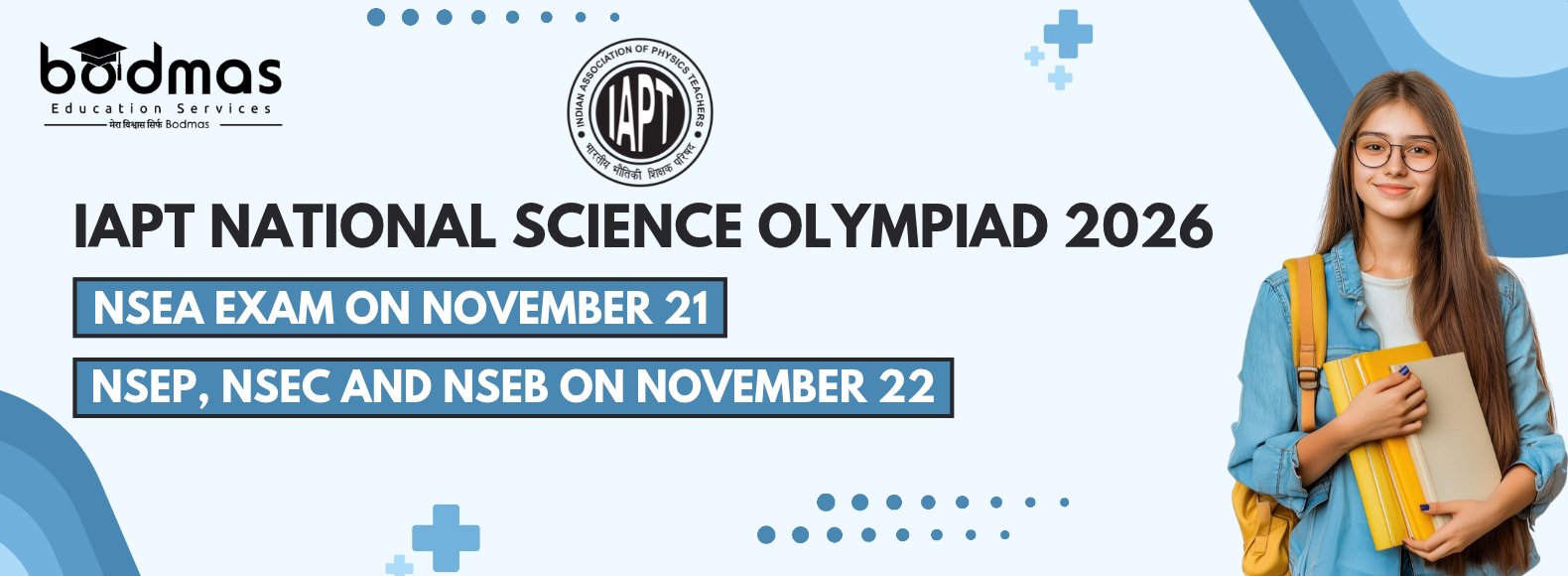
The Indian Association of Physics Teachers (IAPT) is conducting the National Standard Examination (NSE) 2026 as part of India's preparation and selection process for the International Science Olympiads 2027. The examinations will be conducted on November 21 and November 22, 2026, across designated examination centres in India.
According to the official examination schedule, the National Standard Examination in Astronomy (NSEA) will take place on November 21. The National Standard Examination in Physics (NSEP), Chemistry (NSEC), Biology (NSEB) and Junior Science (NSEJS) will be conducted on November 22, 2026.
These examinations provide students with an opportunity to test their scientific knowledge, analytical abilities and problem-solving skills at the national level.
IAPT NSE 2026: Complete Examination Schedule
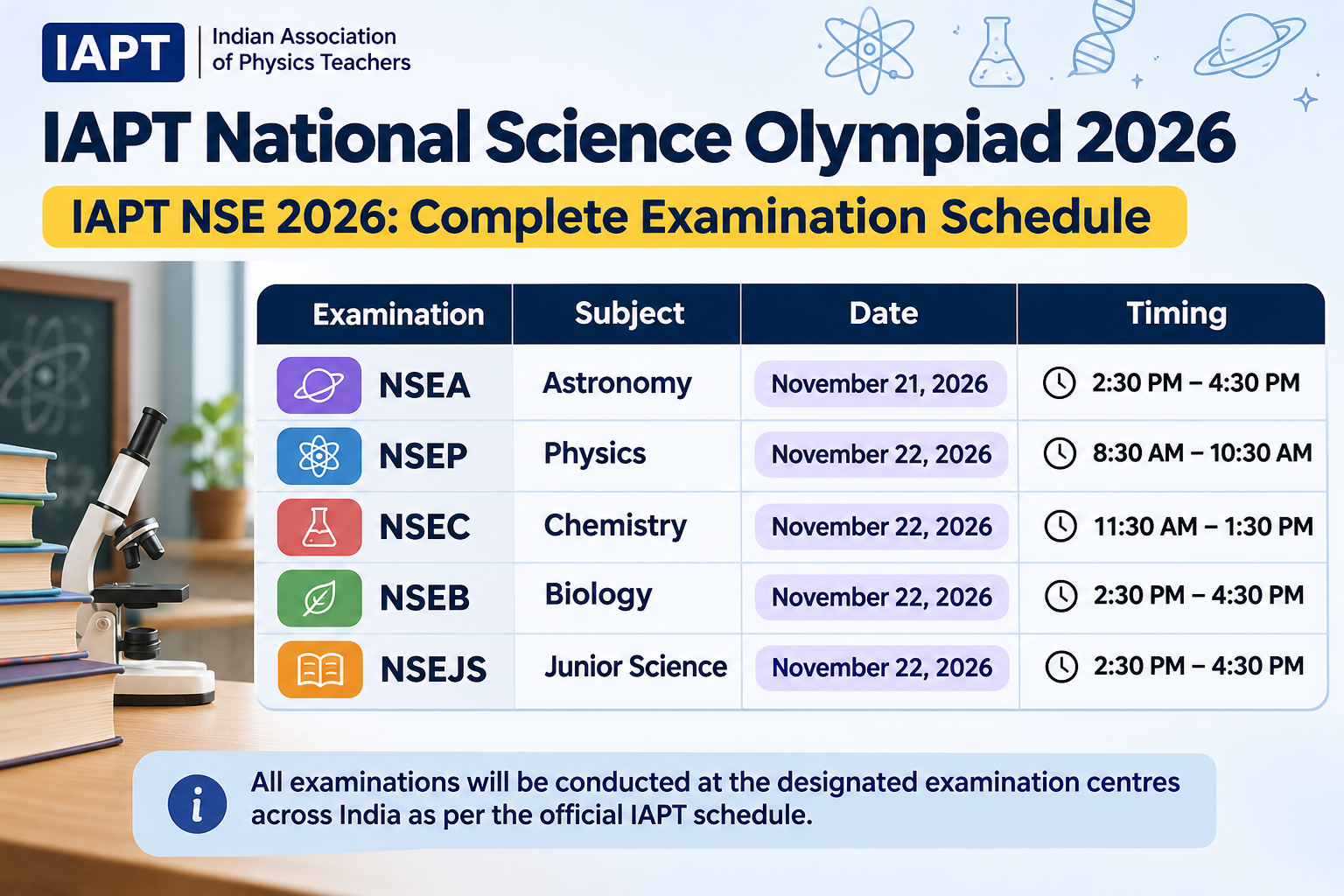
The IAPT has released the subject-wise examination schedule for the National Standard Examination 2026. Students should carefully check their examination dates and timings.
Examination
Subject
Date
Timing
NSEA
Astronomy
November 21, 2026
2:30 PM – 4:30 PM
NSEP
Physics
November 22, 2026
8:30 AM – 10:30 AM
NSEC
Chemistry
November 22, 2026
11:30 AM – 1:30 PM
NSEB
Biology
November 22, 2026
2:30 PM – 4:30 PM
NSEJS
Junior Science
November 22, 2026
2:30 PM – 4:30 PM
All examinations will be conducted at their respective designated examination centres.
What Is the National Standard Examination (NSE)?
The National Standard Examination is the first stage of India's selection programme for the International Science Olympiads. These examinations are conducted by the Indian Association of Physics Teachers (IAPT) in coordination with the relevant national Olympiad programme authorities.
The examinations cover different scientific subjects, including Physics, Chemistry, Biology, Astronomy and Junior Science.
Students who perform well in the initial examination may qualify for the next stages of the national selection process, depending on the subject and eligibility requirements.
How Can Students Represent India at the International Science Olympiad?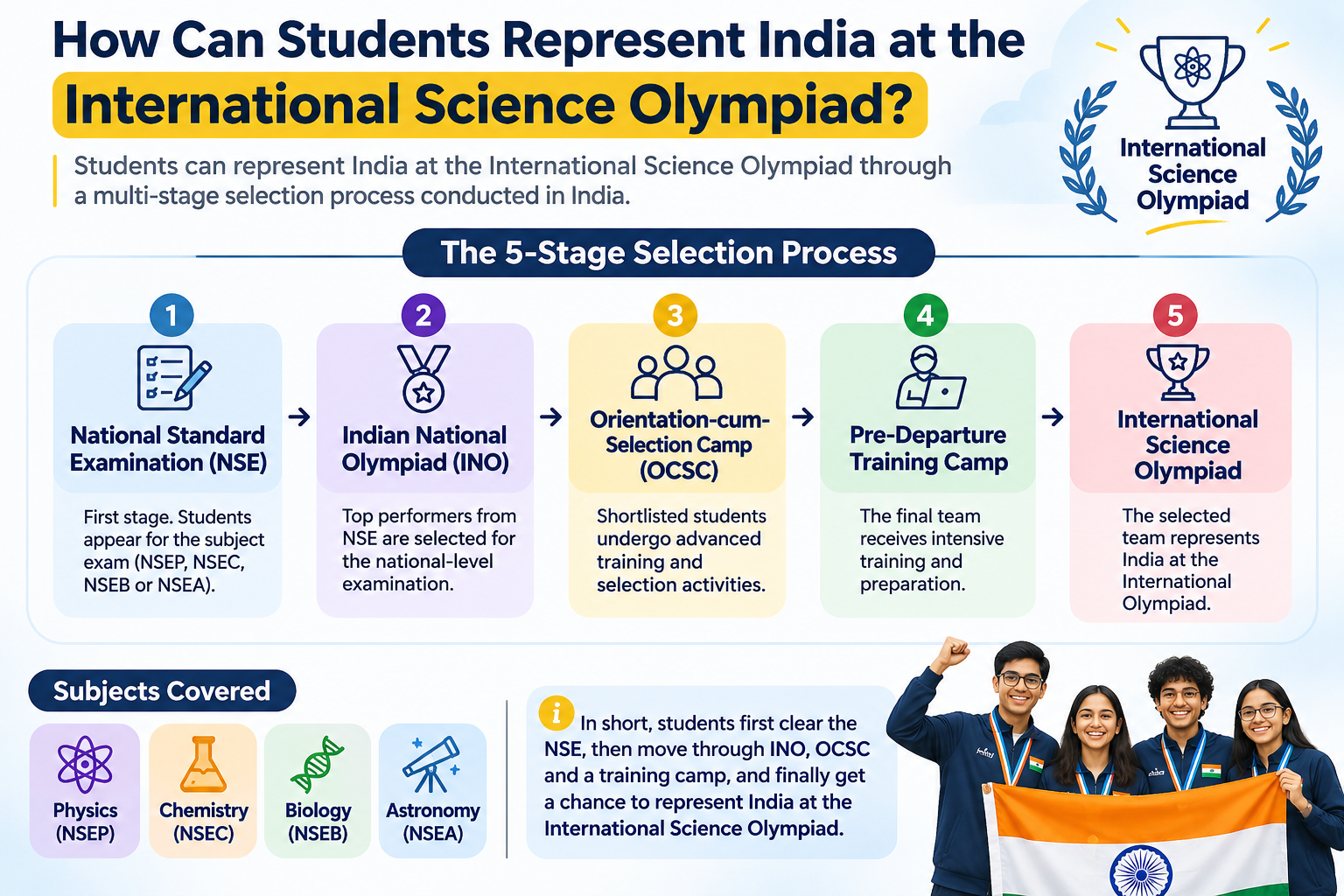
One of the most interesting facts about the National Standard Examination is that it is not just a regular school-level science competition. It is the starting point of a multi-stage selection process through which talented students can get an opportunity to represent India internationally.
For Physics, Chemistry, Biology and Astronomy, the selection programme follows a five-stage process:
Stage 1 – National Standard Examination (NSE): Students appear for the respective subject examination.
Stage 2 – Indian National Olympiad (INO): Selected students appear for the national-level examination.
Stage 3 – Orientation-cum-Selection Camp (OCSC): Shortlisted students participate in advanced training and selection activities.
Stage 4 – Pre-Departure Training Camp: Selected students receive further preparation before the international competition.
Stage 5 – International Olympiad: The final selected team represents India at the International Science Olympiad.
This process allows students to progress from a national-level examination to an international academic competition.
Important: Junior Science (NSEJS) follows a separate selection pathway conducted by IAPT. It should not be confused with the five-stage HBCSE programme for Physics, Chemistry, Biology and Astronomy.
Who Can Appear for the IAPT National Standard Examination?
The eligibility conditions vary according to the examination.
For NSEP, NSEC, NSEB and NSEA, students from Classes 10, 11 and 12 who satisfy the prescribed age and other eligibility conditions can participate.
For NSEJS, students from Classes 8, 9 and 10 who meet the specified eligibility requirements can appear.
Students should refer to the official IAPT 2026–27 brochure for complete eligibility conditions, including the prescribed birth-date criteria and other restrictions.
What Is the Importance of the Science Olympiad for Students?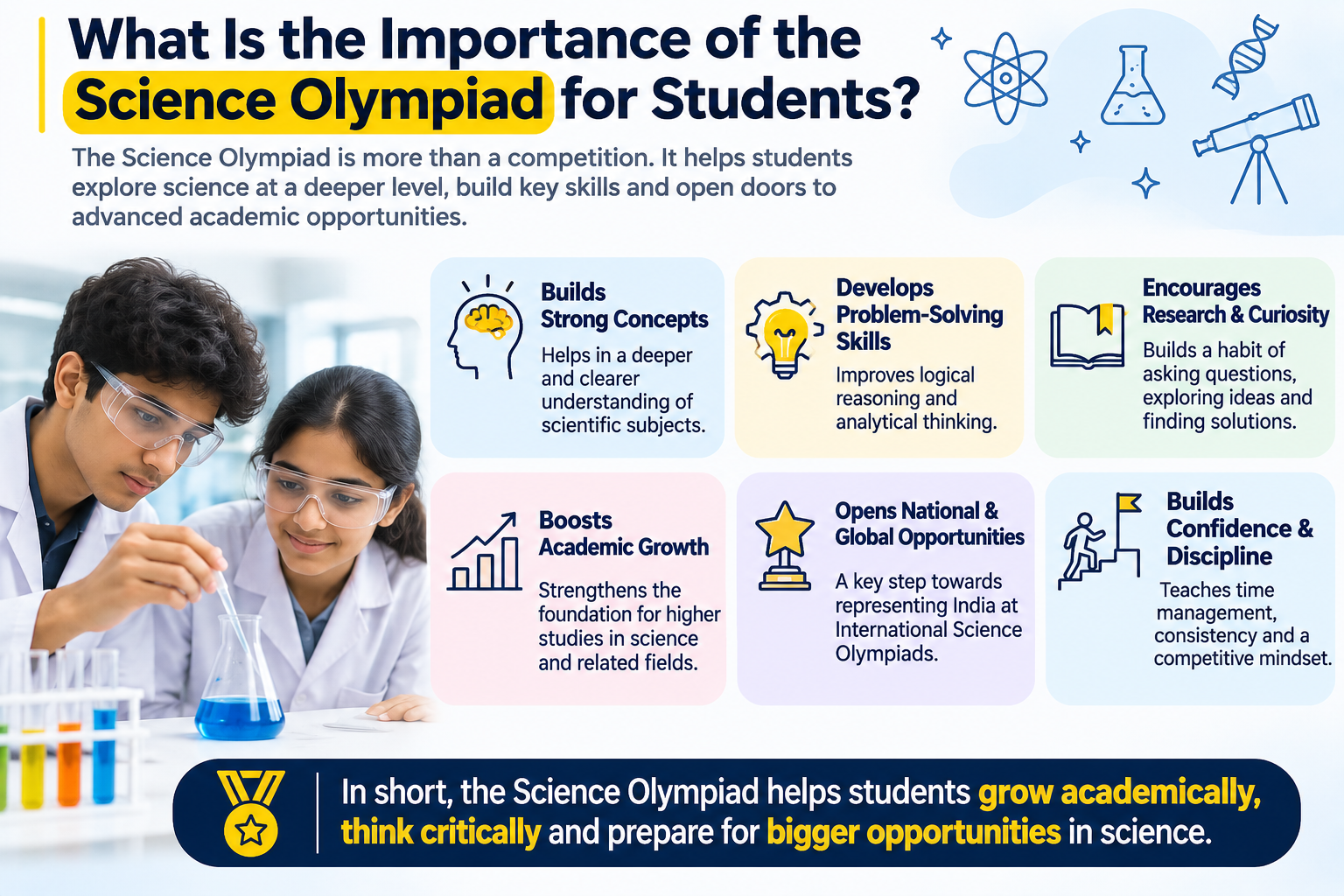
The National Standard Examination gives students an opportunity to explore science beyond their regular school curriculum. The questions are designed to assess conceptual understanding, logical reasoning and the ability to apply scientific knowledge.
Participation can help students develop:
Strong conceptual understanding of scientific subjects.
Analytical and logical reasoning skills.
Problem-solving abilities.
Interest in scientific research and innovation.
Preparation for advanced academic competitions.
Students interested in Physics, Chemistry, Biology and Astronomy can use these examinations to explore their academic interests and understand their strengths.
Where Can Students Check Official Information?
Students can visit the official websites of the Indian Association of Physics Teachers and the Homi Bhabha Centre for Science Education for examination-related updates, selection information and further announcements.
IAPT Official Website: https://www.iapt.org.in/
IAPT NSE 2026–27 Examination Portal: https://iapt.manageexam.com/
HBCSE Science Olympiad Programme: https://olympiads.hbcse.tifr.res.in/
Conclusion
The IAPT National Standard Examination 2026 is an important opportunity for students interested in science and academic competitions. With NSEA scheduled for November 21 and NSEP, NSEC, NSEB and NSEJS scheduled for November 22, students should carefully follow their respective examination timings.
For students who wish to pursue science at an advanced level, the National Standard Examination can be an important first step towards participating in India's International Science Olympiad selection programme.
Powered by Froala Editor